The SpainUDP Program focuses on complex clinical cases that, after exhausting the available diagnostic resources within the healthcare system, still lack a clear diagnosis. Its main objective is to offer a second chance to these individuals by exploring innovative approaches to study and research—such as advanced genomic sequencing and collaborative work among specialists—with the aim of identifying and understanding the disease they suffer from.
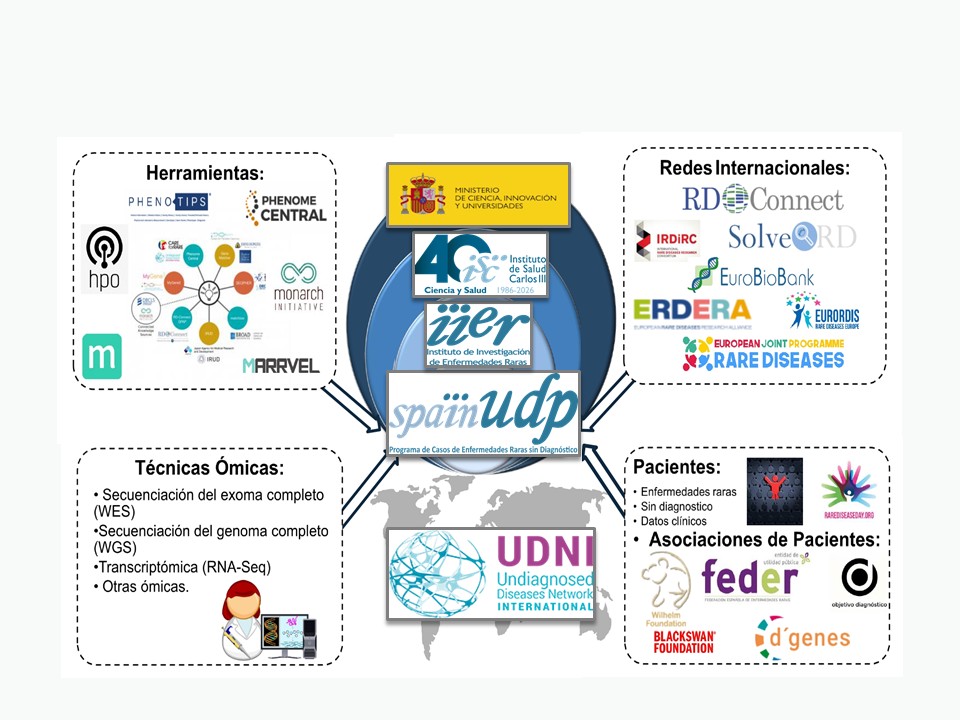
In addition, the IIER promotes this program from an open and collaborative perspective, actively working with other research groups, clinical centers, and specialized networks both nationally and internationally. One example of this is its active membership in the UDNI (Undiagnosed Diseases Network International) since its inception in September 2014, which enables the sharing of knowledge, experiences, and cases with other centers of excellence around the world. To learn more about our strategic partnerships and collaborative networks, we invite you to visit the “Collaborations” section.
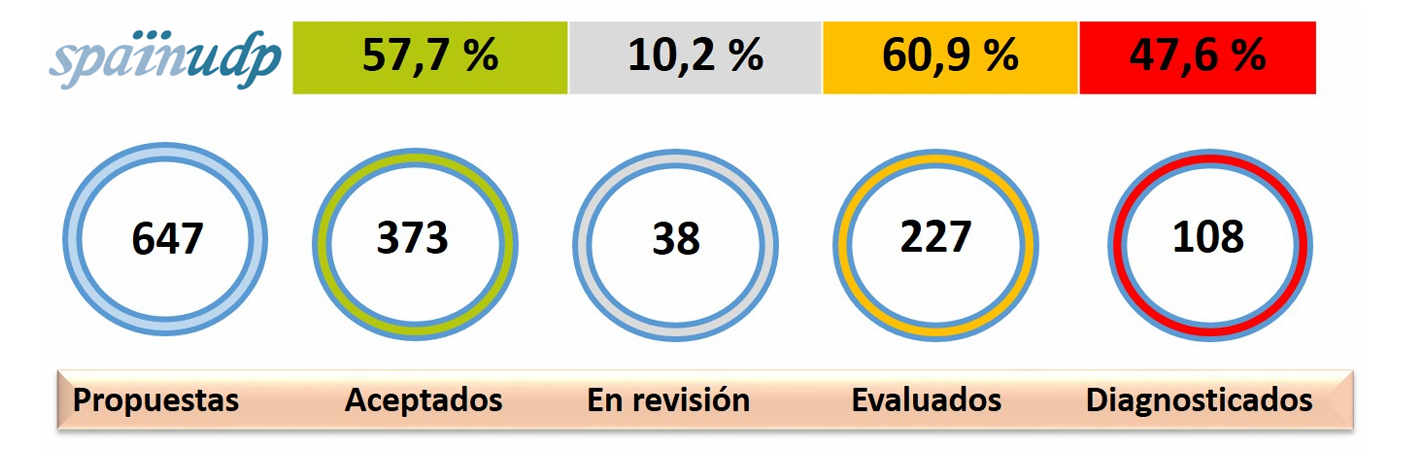
Since the launch of the SpainUDP Program, a total of 599 clinical case proposals have been received seeking a diagnosis within the framework of this project. Of these, 352 have been accepted, representing 58.8% of the total. Among the accepted proposals, 97 are currently on hold due to a lack of sufficient information to proceed with their evaluation, while another 38 have completed the submission of the required documentation, although this information has not yet been reviewed by the program team.
To date, 217 proposals have been evaluated. Of these, 97 have resulted in a clinical or genetic diagnosis, accounting for 44.7%. The remaining 120 cases, representing 55.3%, did not obtain a diagnosis in this initial phase. These cases have been referred to later stages of the program, following the procedures established in the evaluation and diagnosis process described in the corresponding section on the program phases.
This information highlights the ongoing efforts of the SpainUDP Program to advance the understanding of rare and undiagnosed diseases, and emphasizes the importance of research, interdisciplinary collaboration, and a personalized approach in the search for answers for each patient.